
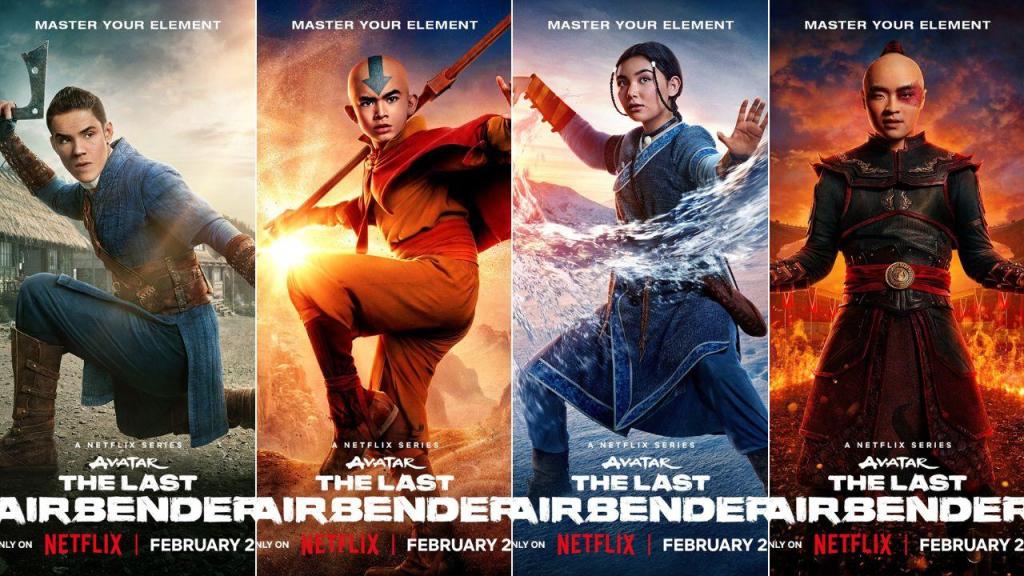
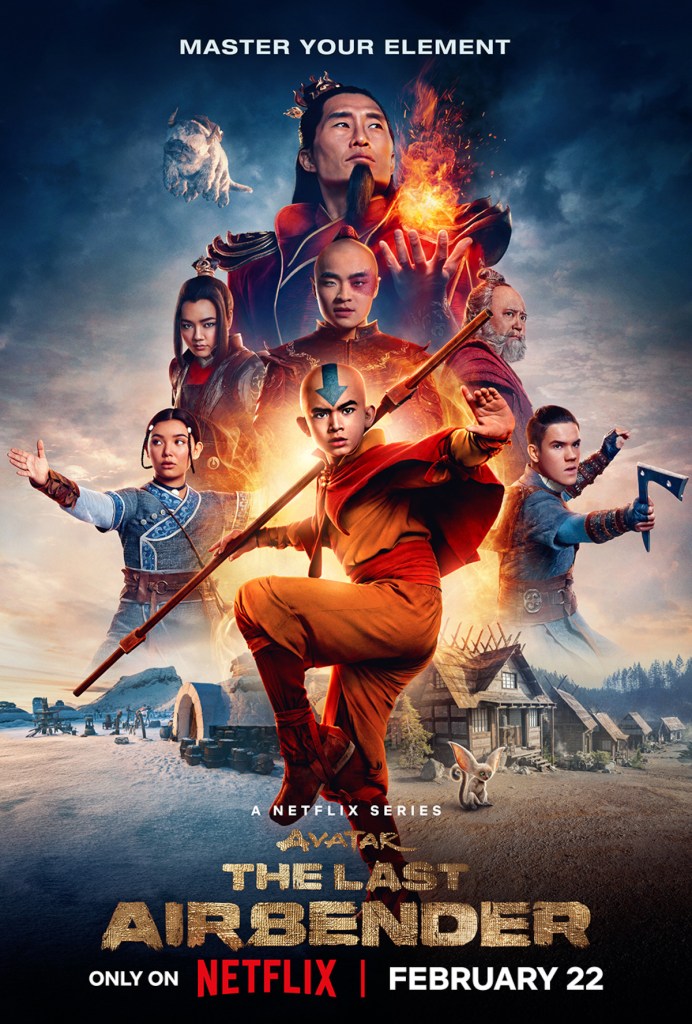
After being bored over the summer of 2023 and i was curious to see why Avatar The Last Airbender is regarded as the best show of all time, I decided to log in to my Netflix account and watch episode 1 “The Boy In the Iceberg,” and I’ve been hooked ever since! Definitely one of the best shows I’ve ever watched! The world-building, character arcs, and overarching narrative with such small details you could only notice on a second watch when you’re taken away by the world of Avatar is what makes this show so amazing to watch!
So after being part of the fandom and hearing “There is no movie in Ba Sing Se“, Netflix’s first teaser trailer for the live-action Avatar: The Last Airbender dropped and I was so excited! However, I had some concerns because seeing Azula and Ozai in season 1 was weird. But I was like, it’s gonna be fine, right? After adding more stuff to what’s already there is good… right? Well, after hearing about Aang being more focused with ‘no sidequests’, Sokka’s sexism being removed, and Katara being more of a ‘leader’, and seeing more characters than necessary in the first season, this feeling was definitely starting to break. While I’m eager to see the adaptation, the changes to the characters and storyline are causing some apprehension. The essence of the original series must be preserved to ensure a successful transition to live action.
But let’s not be too harsh now. So I waited until Netflix’s Avatar: The Last Airbender was released and yeah. I have a ton to say, so put on some tunes, grab some snacks, and get cosy because this is gonna be a long one, guys – hopefully you’re not bored of me already!
Why I Didn't Finish This Adaptation
Okay, so here’s the deal – I wasn’t feeling this show. It’s like I’m about to write a whole essay, but let me write up my thoughts on the first episode then I’ll talk about the character arcs to explain how Netflix totally missed the mark with this Avatar: The Last Airbender adaptation… (which I’ll call NATLA for short) and just as I’m writing, I find out they’ve announced book 2 and book 3. 😔 Well, that’s just perfect. 🤦🏽♀️
The first episode of NATLA is called “Aang,” a combination of the first three episodes of the original: “The Boy in the Iceberg,” “The Avatar Returns,” and “The Southern Air Temple.” These episodes in ATLA set the stage for the entire series.
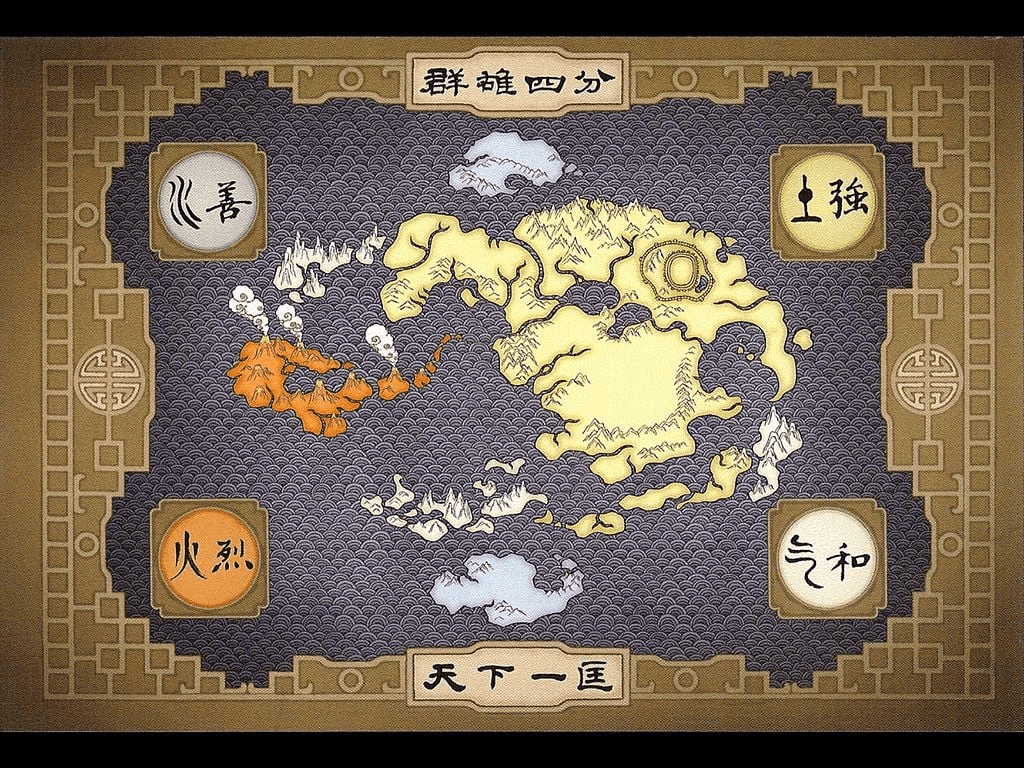
ATLA follows an episodic format, which allowed the show to create a detailed world with 4 different nations: the Air Nomads, the Earth Kingdom, the Water Tribe, and The Fire Nation showcasing their cultures and bending styles using a “soft magic system”. The iconic opening states that “only the Avatar can master all 4 elements”. Bending the element is only the physical manipulation of the element and is mainly defined by the skill of the bender, strength, and power. The strength of the bender skills level matched the range and variety of their attacks. Each element has its own strengths and weaknesses. The ability to bend is something you are born with; not everyone in each nation is a bender, and there are no magical objects or traditional magic. This is mainly shown in the opening of Sokka and Katara fishing in the South Pole and ‘The Boy in the Iceberg’.

This is very important in terms of storytelling; ATLA is more than a kids’ cartoon. While watching the opening three episodes for the first time, it becomes an immersive experience that draws you in and makes you feel a part of that world, most importantly, as a ‘hook’ that can vary for many viewers, it is what makes you want to keep watching. This is all done to establish the rules, history, and dynamics of the Avatar world, and the making of the show made it so highly acclaimed and praised 19 years after its release. Personally, Book 1 is my favourite book because it lays the foundation for the entire story with its near-perfect world-building, which sets the tone. I would not have binge-watched the show over the summer at 19 years old for the first time without it.
Now let’s talk about how NATLA completely missed the point of what makes this show so special and the magic that is completely lost while watching this adaptation, which I feel is why NATLA was such a disappointment for me that instead of developing narrative arcs with huge pay-offs, they just told us, which has made the characters shadows of their original selves. It is more focused on the spectacle, espionage, and what gets the most viral clips, not to mention the nerve to act more mature, than ATLA, which had some of the worst writing and dull characterisation, i don’t care if it’s better than the “There is no movie in Ba Sing Se” it doesn’t make it good. I would have thought that the bending and visual effects would have been the hardest to translate not the writing.
If this were my first experience in the world of Avatar, I wouldn’t watch past episode 1.
NATLA opens with Sozin’s Comet in the background, setting the stage for an action-packed sequence featuring Earth Kingdom spies fleeing from Fire Nation soldiers. The earthbending and the quirky hybrid animals like the Ostrich Horse really stood out to me and i did enjoy that. However, there’s one thing that bothered me right away was the “earthbender” line. I’ll delve deeper into that later. As a ‘Game of Thrones’ inspired series for adult audiences.
One of the spies is captured and brought in for interrogation by Fire Lord Sozin. It is revealed that he deliberately leaked battle plans to the Earth Kingdom to divert attention from the intended target, the Air Nomads. While this decision may seem weird, the scene should have concluded at this point. Then the story transitions to the introduction of the Water Tribe siblings, Sokka and Katara……
Yeah, that doesn’t happen
Instead of assuming we all understand what has been said, we need a thorough explanation starting from the ground up. The more “mature” and ‘Game of Thrones ‘-inspired show should have more dialogue because it seems like the audience they’re trying to attract can’t put two brain cells together. To make matters worse, NATLA doesn’t shy away from on-screen burnings, to make us take the the show more seriously.

If you didn’t know, the Fire Nation were the villains, as if the audience is a bunch of babies. The most annoying part was when Sozin was blabbering about why they should attack the Air Nomads; one of the sages goes, “The Avatar is yet to be revealed”… Like, seriously? What kind of opening scene is this? Instead of explaining what the Avatar actually is, you know, the main title of the show, they jump straight into how the war started. So, from the get-go, I’m thinking, “This feels like something from Book 3 in Book 1.” Narrative-wise, it’s not a good starting point.
In the original ATLA, we open with the iconic intro narrated by Katara – “Water. Earth. Fire. Air.” Katara gives the audience a clear introduction to ATLA and also our first impression of Katara and the story being told from her perspective.
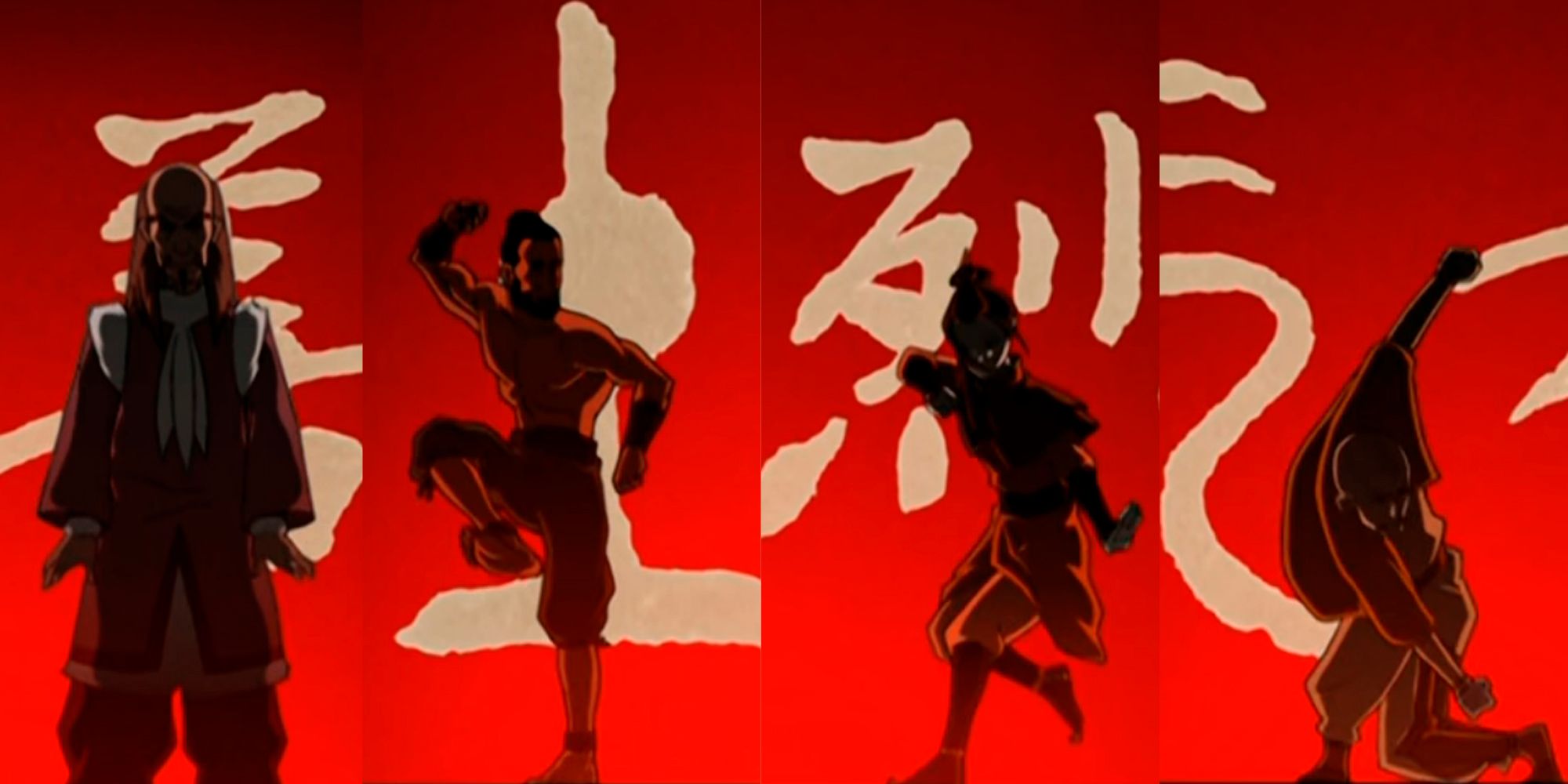
“My grandmother used to tell me stories about the old days, a time of peace when the Avatar kept the balance between Water Tribes, Earth Kingdom, Fire Nation, and Air Nomads. But that all changed when the Fire Nation attacked.” This is already more clear and precise than NATLA and can leave mystery and intrigue to find out what happens next.
Then we move on to Katara explaining that “Only the Avatar mastered all four elements, only he could stop the ruthless Firebenders” and next point is foreshadowing for what the ‘The Last Airbender’ part of the title meant “But when the world needed him most, he vanished”. Katara tells us about the impact of the 100-year war and how the Fire Nation nearing victory has led to the men of her tribe including her father leaving and how everyone has lost hope that the Avatar wasn’t reborn to the Air Nomads with the Fire Nation ominous and intimidating theme in the background, effectively conveying the oppressive nature of their imperialism without the need for dialogue or scenes. This subtle yet impactful storytelling technique allows the audience to grasp the depth of the conflict and the formidable nature of the Fire Nation.
The introduction closes with Katara stating that “Some people believe that the Avatar was never reborn into the Air Nomads, and that the cycle is broken. But I haven’t lost hope. I still believe that somehow the Avatar will return to save the world” with the Avatar theme playing in the background that gives us hope and a heroic theme that presents another way to end this war and now we’ll see the journey of this hero that Katara believes in and will bring hope to the Water Tribes and Earth Kingdom with the theme continuing with the title card of the episode “The Boy In The Iceberg” foreshadowing Aang’s introduction. That already catches my interest and the audience.
The introduction of the show ATLA is truly captivating. It sets the stage for a compelling narrative about hope, heroism, the themes of war and the importance of the Avatar in bringing balance to the world. The use of music to convey emotions and establishing the themes in the introduction is powerful way of storytelling.
Which show is intended for both kids and ‘mature’ audiences again?
The introduction of ATLA is truly captivating. It sets the stage for a compelling narrative about hope, heroism, and the importance of the Avatar in bringing balance to the world. The use of music to convey emotions and themes is indeed powerful and adds depth to the storytelling. It’s fascinating how one musical score can profoundly impact the audience’s interpretation of the content.
While I had problems with pretty much all the character portrayals in NATLA, I’ll zero in on the ones that really bothered me while watching.
Aang
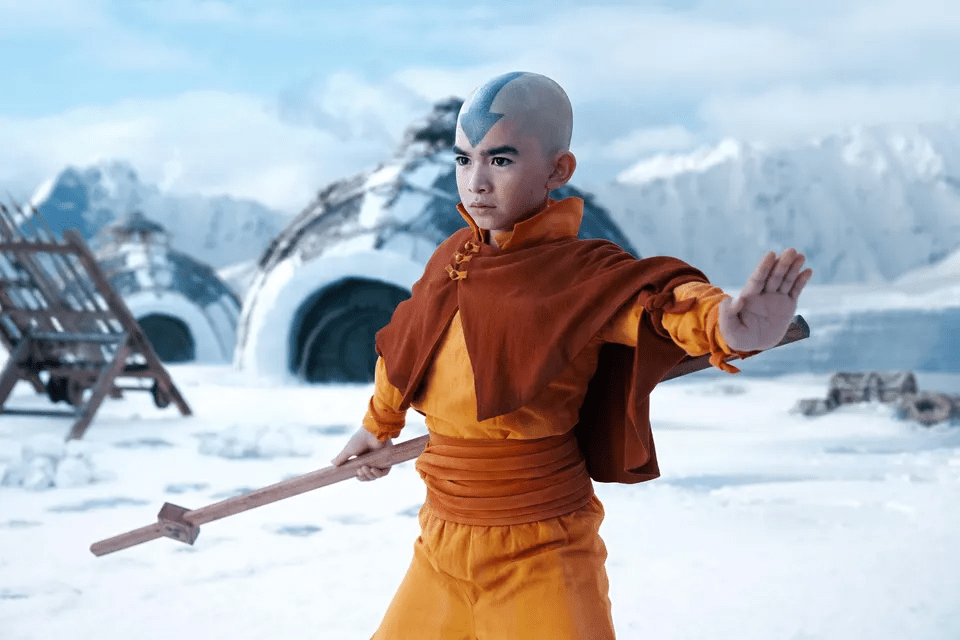
I’ll start by saying that Aang is my favourite character. I can talk all day about his arc, but I’ll keep it short here. There are three aspects to Aang’s character which are established from the moment we are first introduced to him: The Child, The Monk, and The Avatar. While his arc is quite hard to see on a first watch to many, I found this a very clever narrative tool to show character development. Aang’s arc stands out to me as the main protagonist whose complexity and nuance doesn’t need to be loud, who doesn’t need to act angsty or become more ruthless, or even a redemption arc, to be impactful. I remember reading this amazing meta about Aang who is portrayed as an Eastern protagonist while Zuko has the Western protagonist traits, which is why i believe Aang’s arc is overlooked compared to Zuko and other characters in the show. Aang goes from “The Boy in the Iceberg” to “Avatar Aang” while still maintaining his carefree and lightheartedness, which is so rare to see now as the main protagonist (Miles Morales is the only one I can think of I’ve seen recently).
In NATLA, Aang is depressing and bland. I don’t really understand why anyone in that writing room decided to show the Air Nomad genocide on screen and even CHANGE the fact that Aang ran away. The Air Nomad genocide is the core theme of Aang’s character, being ‘the Last Airbender’ and his guilt of running away from his responsibilities, this changes everything his character is supposed to represent and his character arc. To have the nerve to have Aang be ‘more goal focused’ and ‘no more side quests’ to not even waterbend in Book 1 water, the irony is wonderful.
Suki
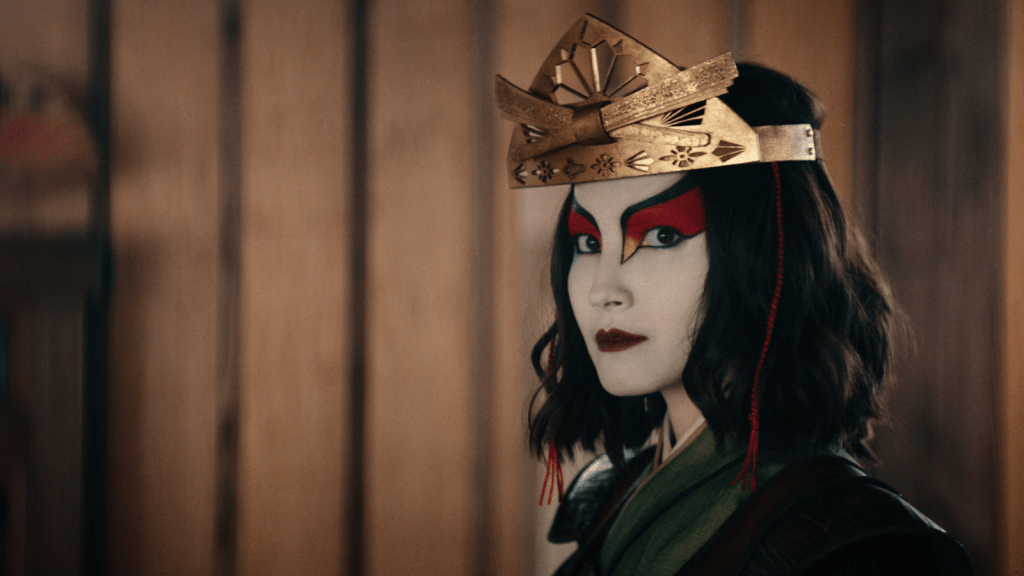
Fun fact: Suki was initially intended to appear only in the ‘Kyoshi Warriors’ episode in Book 1. However, due to the overwhelmingly positive reaction from fans, she made a return in Book 2 and ultimately joined Team Avatar towards the end of Book 3. This has led to some mixed reception within the fanbase, as it’s fair to say that she hasn’t received the same level of development as the other main characters. In this adaptation, it would have been great to see Suki given the opportunity for more development and a more profound role within Team Avatar. Suki as a character is heavily dependent on Sokka’s sexist remarks and her role in training him as a Kyoshi warrior and changes his views on women – imagine if he didn’t learn this lesson before meeting Toph 🙂 This adaptation misses the opportunity to put greater focus on her leadership and mentorship skills like how did she became the leader of Kyoshi Warriors , especially during the additional time spent on Kyoshi Island…… and NATLA went with turning her into a lovesick girl which was even more sexist than Sokka’s remarks.
Azula

In many ways, Azula is truly the main antagonist of ATLA, despite only making a brief appearance in Book 1. She sets the tone when we first encounter her in the premiere of Book 2, “The Avatar State”. Azula embodies everything Zuko is not. She is cunning, manipulative, and intelligent – qualities that Zuko lacks. Instead of deploying a fleet, she strategically chooses to pursue Aang and his friends with a “small elite team”. Her formidable power is showcased when she demonstrates lightning bending for the first time, leaving an impression on the audience. Her attention to detail is apparent as “not a single hair [is] out of place”, revealing her unwavering pursuit of perfection from the outset. Her raw power, symbolised by her iconic blue flames, coupled with her strategic mindset, establishes her as a formidable antagonist. Only in the final stages of Book 3 do we witness the complexity of her character and internal struggles, ultimately leading to her downfall. Her psychological breakdown – a haunting portrayal of her pursuit of perfection to meet her father’s expectations reveals a fear of failure stronger than Zuko’s. She is effectively countered by Zuko and Katara in numerous ways , which made the Final Agni Kai such an iconic fight.
NALTA version pales in comparison and has completely missed the point of her character and the impact she has on the story but making her a Book 1 character which ruins of the flow an already rushed and messy story.
By introducing her early fails to leave an impression or have the impact her ATLA portrayal has and lacks the depth and attitude that made her a compelling villain.
Ozai
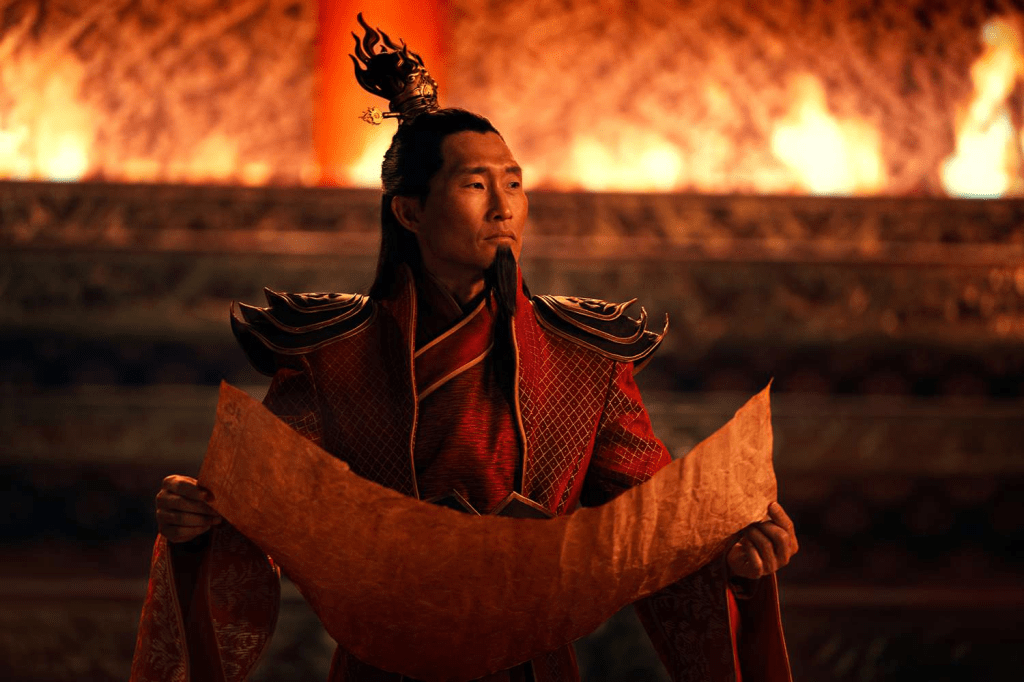
What has happened to the villains? We can have characters embody evil without delving into a sympathetic storyline or arc to explain their actions. Ozai stands out as a memorable villain due to his overarching influence in ATLA. His ambitions and actions as the embodiment of the Fire Nation’s imperialism is the driving force behind the story and significantly impacts the character arcs of Aang, Zuko, and Azula. Well pretty much every single character in the show. So much that we only see shadows or parts of his face with only Mark Hamill’s voice, we as the audience only get to see his face when Zuko ‘restores’ in honor and unironcially he is an older Zuko showing that the man who told his son “You WILL learn respect, and suffering will be your teacher!”, doesn’t need to stereotypically look like a monster to be one and has no redeemable qualities. He is unapologetically evil
Why then?
I’ll be honest, seeing Ozai as a fully intregated character in Book 1 set off warning bells because I was hoping, even begging, for NATLA to not make Ozai sympathetic. And of course, we saw how that went.
Conclusion
I was really let down. I didn’t even finish the series, but from what I saw in the first few episodes, it felt like they missed so many chances and went in a different direction from the original series. This took away from the special charm of the show. They didn’t handle the main themes and characters well, and the characters like Aang, Katara, Sokka, Suki, Azula, and Ozai weren’t depicted in a good way. The adaptation just didn’t capture what made the animated series a timeless classic. It was missing the depth, emotional moments, and impactful storytelling that made the original so amazing.
So what did you think about the adaptation? it’s been a couple months now so i’m interested to see any discussions after the hype of the show has calmed down!
 Whimsy Express
Leave a comment